Marketing helps businesses reach customers, build trust, and grow their brand. Today, every business owner has one common question: Traditional Marketing vs Digital Marketing — which one should I choose? Both methods work well, but they serve different purposes. In this blog, you will clearly understand what each method means, how they differ, their benefits, and which one suits your business. This simple and attractive guide will help you choose the right marketing approach for better growth.
What Is Traditional Marketing?
Traditional marketing is a form of marketing that does not use the internet. It has been used for many years and is still powerful in many industries. Before we move deeper into Traditional Marketing vs Digital Marketing, let’s explore traditional methods clearly.
Common Examples of Traditional Marketing
Newspaper and magazine ads
TV commercials
Radio advertisements
Billboards and hoardings
Flyers, brochures, and posters
Direct mailers
Banners and standees
Exhibitions, trade shows, and events
Traditional marketing helps businesses reach people at physical locations. It works well because many people still trust offline media and feel more connected to physical advertisements.
What Is Digital Marketing?
Digital marketing is promoting your product or service through online platforms. This includes websites, social media, search engines, emails, and digital ads. In today’s world, people depend heavily on their mobile phones and the internet. That is why the topic of Traditional Marketing vs Digital Marketing is becoming more important for businesses to understand.
Common Types of Digital Marketing
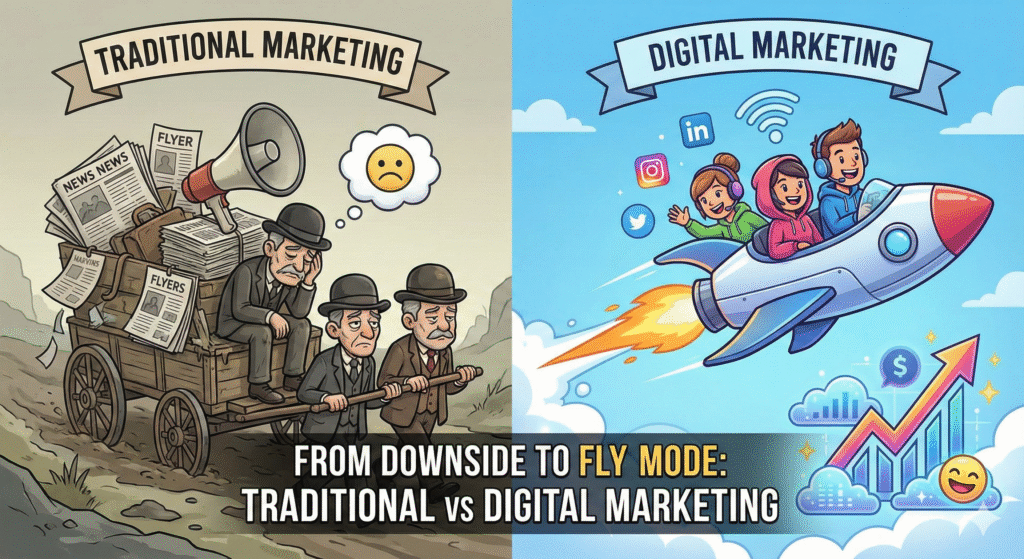
Traditional Marketing vs Digital Marketing – Key Differences
| Category | Traditional Marketing | Digital Marketing |
|---|---|---|
| 🎯 Audience Reach | Reaches a broad audience but without specific targeting. | Offers targeted reach based on age, location, interests, and behavior — a major benefit in Traditional Marketing vs Digital Marketing. |
| 💰 Cost | Expensive methods like TV ads, billboards, and print ads. | Budget-friendly and flexible. Even small businesses can run ads with low daily budgets. |
| ⚡ Speed | Slow setup due to printing, approvals, and placement work. | Instant launch. Campaigns can be created and tracked within minutes. |
| 🤝 Engagement | Limited customer interaction and mostly one-way communication. | High engagement with comments, messages, likes, and shares. |
| 📊 Data & Tracking | Very little tracking available. Results are difficult to measure. | Advanced analytics including clicks, reach, conversions, and customer behavior. |
| 🔧 Flexibility & Control | No option to edit once printed or published. | Full control. You can pause, edit, or optimize campaigns anytime. |
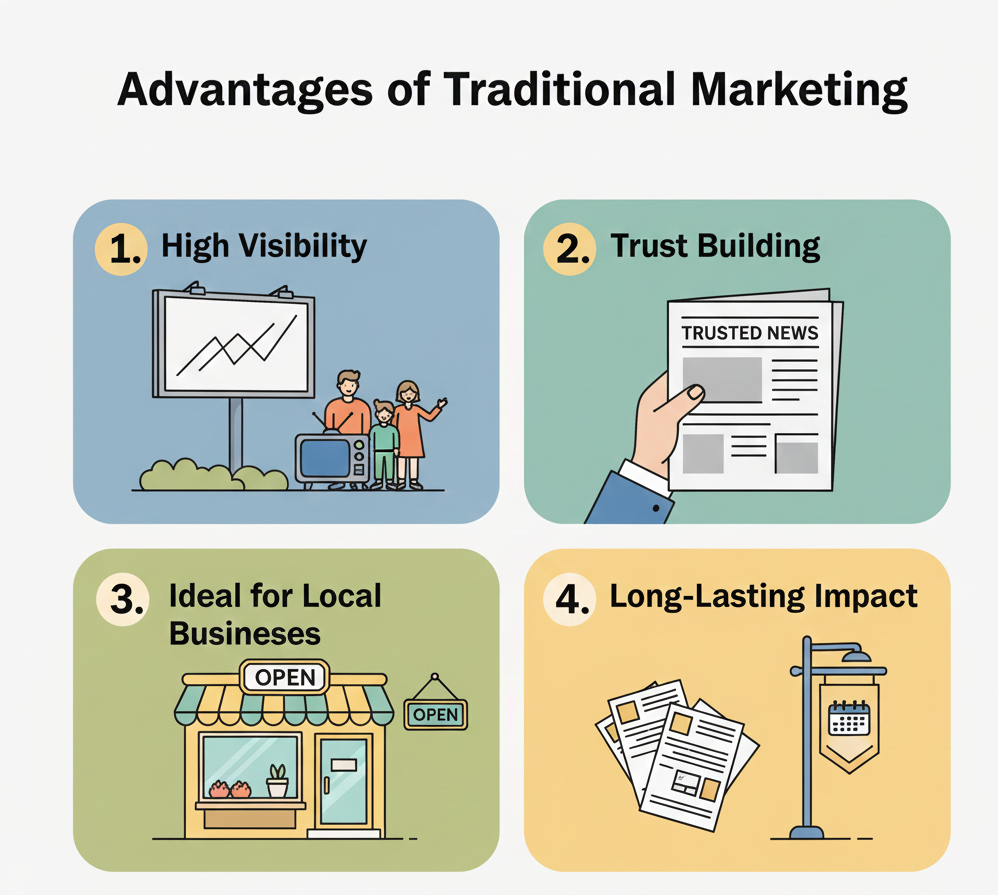
Advantages of Traditional Marketing
While digital marketing is growing fast, many businesses still rely on traditional methods. Understanding these benefits helps you compare Traditional Marketing vs Digital Marketing more effectively.
1. High Visibility
TV commercials and billboards can reach thousands of people quickly.
2. Trust Building
Printed ads feel more real and trustworthy to many customers.
3. Ideal for Local Businesses
Traditional marketing is excellent for shops, restaurants, supermarkets, clinics, salons, and other local businesses.
4. Long-Lasting Impact
Billboards, flyers, and banners stay visible for days or weeks, giving long-term exposure.
5. Best for Older Audiences
People who are not active online still trust offline advertising more.
Advantages of Digital Marketing
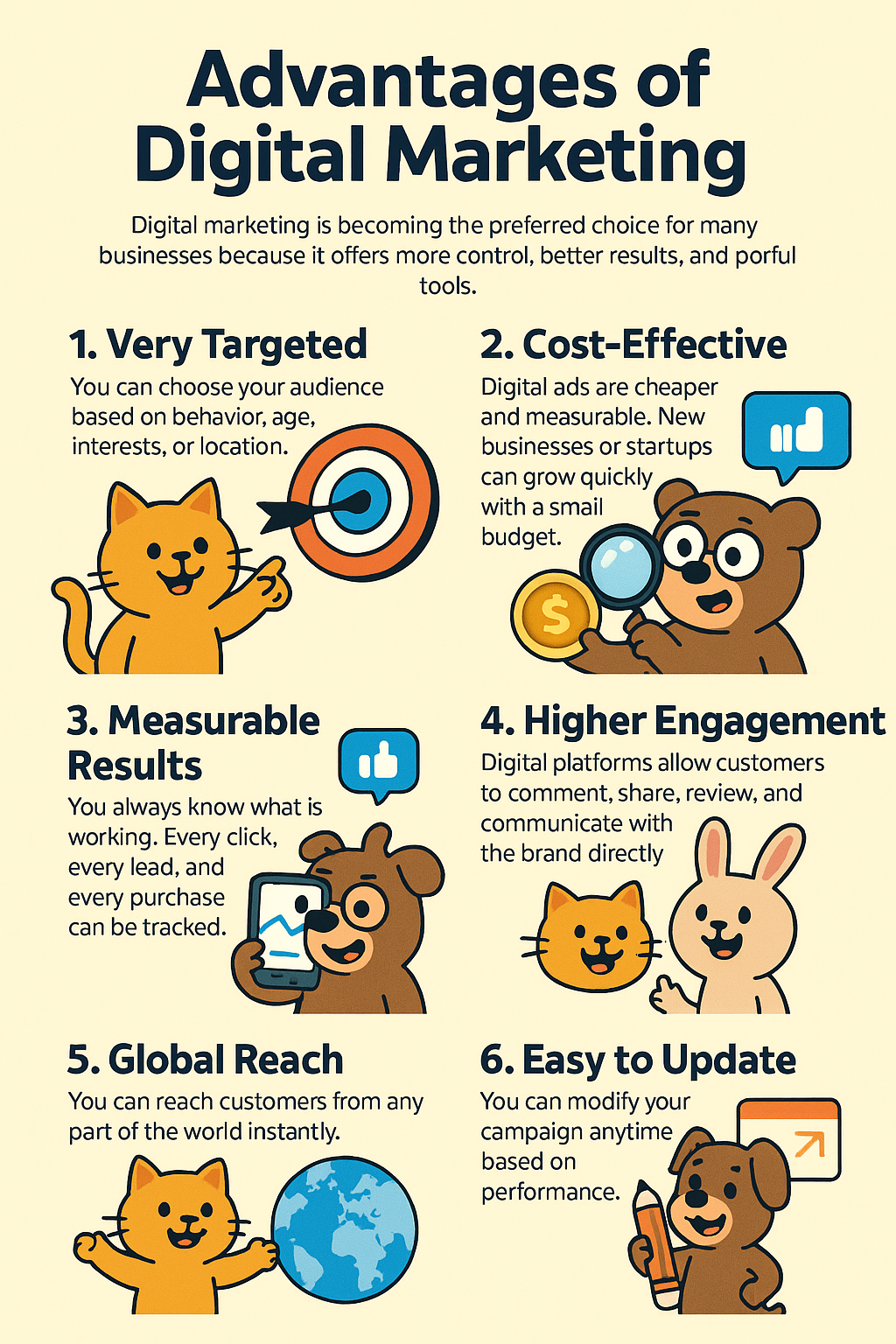
Digital marketing is becoming the preferred choice for many businesses because it offers more control, better results, and powerful tools.
1. Very Targeted
You can choose your audience based on behavior, age, interests, or location — making Traditional Marketing vs Digital Marketing an interesting comparison because offline ads cannot offer this precision.
2. Cost-Effective
Digital ads are cheaper and measurable. New businesses or startups can grow quickly with a small budget.
3. Measurable Results
You always know what is working. Every click, every lead, and every purchase can be tracked.
4. Higher Engagement
Digital platforms allow customers to comment, share, review, and communicate with the brand directly.
5. Global Reach
You can reach customers from any part of the world instantly.
6. Easy to Update
You can modify your campaign anytime based on performance.
Traditional Marketing vs Digital Marketing: Which Should You Choose?
Choosing between both depends on your business goals, target audience, and budget. Use this simple comparison to decide:
Choose Traditional Marketing if:
You want local visibility
Your audience is not active on digital platforms
You want high brand recall
You have a large advertising budget
You want physical presence through banners, posters, and offline ads
Choose Digital Marketing if:
You want measurable results
You have a limited budget
Your audience is active online
You want quick leads and conversions
You want to target customers more accurately
When you compare Traditional Marketing vs Digital Marketing, you will notice that digital marketing gives you more control, better insights, and faster results.
Best Strategy: Use Both Together
The most successful businesses today use a combination of both traditional and digital marketing. This is called Hybrid Marketing.
Examples of Hybrid Marketing
Running a newspaper ad with a QR code leading to your website
Printing flyers for a store launch and promoting the event online
Displaying a billboard and running social media ads for the same offer
Combining both gives your brand maximum visibility and trust.
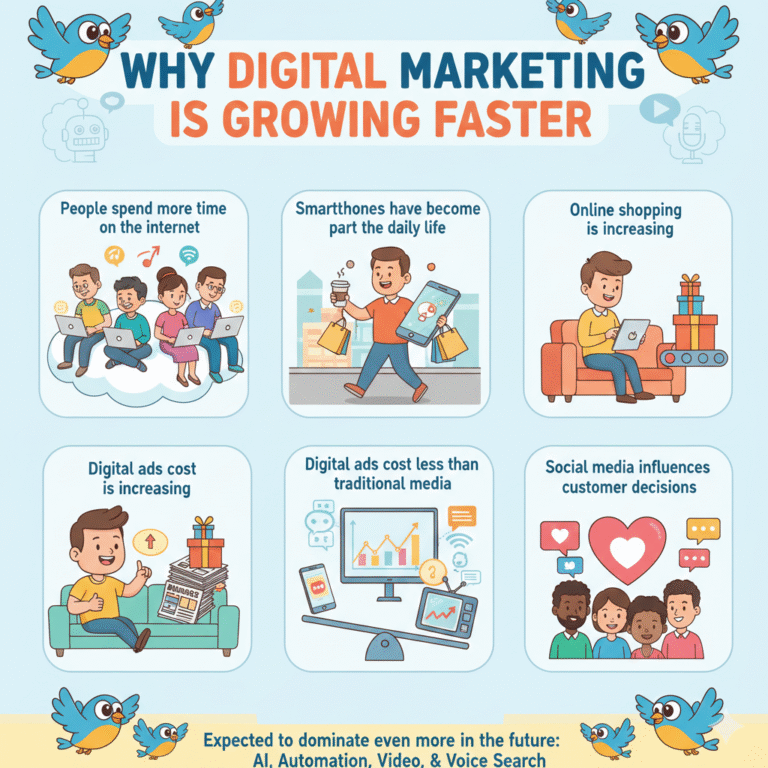
Why Digital Marketing Is Growing Faster
Understanding why digital marketing is expanding helps strengthen the point of Traditional Marketing vs Digital Marketing. Here are some reasons:
People spend more time on the internet
Smartphones have become part of daily life
Online shopping is increasing
Digital ads cost less than traditional media
Businesses want real-time tracking
Social media influences customer decisions
With AI, automation, video marketing, and voice search becoming popular, digital marketing is expected to dominate even more in the future.
Conclusion
The debate of Traditional Marketing vs Digital Marketing is not about choosing one over the other. Both methods have their own strengths. Traditional marketing is powerful for local reach and trust-building, while digital marketing offers targeted, measurable, and cost-effective results.
The best approach is understanding your customers, setting your business goals, and selecting a mix of both strategies. When used together, they create a strong and effective marketing plan that helps your brand grow faster.